
Spring 26/Jessica Frierson
As you read this article, something marvelous is happening in the world around you. Deep within the soil of your lawn and flower beds, microbes are reactivating to break down last season’s dead leaves and organic matter. This decomposition releases nitrogen and other nutrients into the soil for the growth of new plants. Fungi reconnect with plant roots, forming an underground support system for the upcoming growing season. Tree roots awaken, sap begins to flow, and buds begin to swell—slowly at first and then—suddenly bursting open with tiny pre-formed leaves or flowers! The precocious members of the flower families: daffodils, tulips, and hyacinths, cautiously peep their bright faces through the remnants of snow that lay hidden in the shadows of the sun’s faint rays. Spring has sprung!
For those of you who garden, you may be ready to prepare your beds or start some seeds indoors. You understand that while the nudge of spring awakens the soil, not all plants are yet ready to thrive on their own. Experience teaches that timing and environment matter; young plants need the warmth, stability, and light of a sheltered space. You have observed that a season of careful nurture before being exposed to unpredictable conditions best ensures a healthier plant that is deeply rooted, resilient, and ready to withstand the challenges of an open environment.
Perhaps you will be drawn to the vibrant cover of this issue and wonder why it carries the name “GREENHOUSE.” What does a greenhouse have to do with homeschooling, you may wonder. Although you may be long-acquainted with NCHE’s publication, allow me the pleasure of a more formal introduction.
The GREENHOUSE was born on May 10, 1984, with the birth name of Greenhouse Report. It was renamed and transformed into a quarterly magazine in 2012. Over the years, several people have served as the editor, with Debbie Mason, our current editor, providing her very capable guidance for over thirty years. As the GREENHOUSE approaches its forty-second birthday, it offers an opportunity to reflect on how a simple, carefully chosen name has carried meaning across generations—and continues to speak with surprising clarity to the needs of families today.
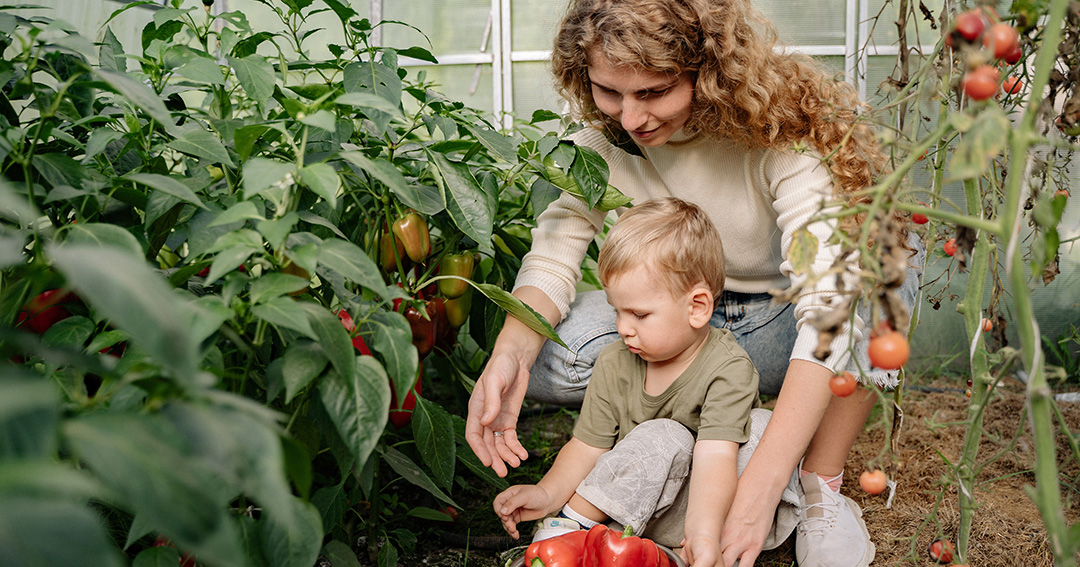
The definition of a greenhouse used in gardening is a “structure that provides a controlled environment for growing plants… [to] support better plant performance and broader growing possibilities.” According to homesteadsupplier.com, its function is to “create a nurturing microclimate that enhances growth, protects from stressors, and boosts productivity…” You can substitute the word “children” for “plants” and get an equally accurate definition of a homeschool.1
A greenhouse is used to achieve a foundational agricultural concept: creating a controlled, shielded environment that provides warmth and stability for tender seedlings results in stronger plants that can better withstand the hardships of life when they are mature and thereby yield a more abundant harvest. Homeschooling applies this agricultural wisdom to education by providing a protected, intentional space where children are raised with care to develop strong roots—academically, socially, and morally—before stepping into a complex and often demanding world.
The parallels between the garden greenhouse and homeschooling are remarkable and thought-provoking:
- Trapping the sun’s energy to foster a warm shelter from the cold outside
- Creating a barrier against harmful pests
- Shielding fragile plants from harsh elements
- Providing customized growing conditions that are specific to each plant’s needs
In short, homeschooling and greenhouse gardening share this distinction: each is a stable, nurturing environment intentionally designed for steady growth free from environmental stress until resilience and strength are more fully developed.
When the Greenhouse Report began in the 1980s, homeschooling was very countercultural with the idea of it, and those who practiced it, often misunderstood. Although the growth of homeschooling families has led to a more mainstream acceptance of it, many of these misperceptions have persisted. Homeschooling is:
- shelter, not isolation
- nurture, not weakness
- preparation, not protectionism
- purposeful engagement, not disconnection from the real world
The cultural language of 2026 has caught up with the agricultural connections of yesterday. Modern phrases like “raising resilient kids,” “whole-child formation,” and “character before credentials” mirror a growing consensus that strong roots, formed with care, best produce confident growth in every season of life. In this era of overstimulation, unprecedented pressures put on children, and weak formation of personal identity and character, these phrases echo the very principles the GREENHOUSE name has represented since its earliest days and affirm that the wisdom embedded in the GREENHOUSE metaphor has only grown more relevant with time.
1Citation: Lesec, S. (2025, April 27). Purpose of a Greenhouse. Homestead Supplier. https://homesteadsupplier.com/blogs/news/purpose-of-a-greenhouse.